طراحی ابتدایی سازه های پوسته ای (PRELIMINARY DESIGN OF SHELLS)

PRELIMINARY DESIGN OF SHELLS

The principal purposes for preliminary design of any structure is: (1) To obtain quantities of materials for making estimates of cost. (2) Obtain a clear picture of the structural action, (3) Establish the dimensions of the structure, and, (4) Use the preliminary design as a check on the final design.

It is not expected that these preliminary design calculations be precise, but rather they should be within an accepted tolerance. The worst way to start a design is to immediately set up a finite element analysis. Any new type of structure requires an extended lead time to obtain a thorough understanding of the structural action.

The discussion of preliminary analysis here, has been restricted to principals rather than to presentation of calculations. Given these principals, the engineer should be able to set up his own calculations. Do not try to design shells without a thorough study of the relevant sections of the current American Concrete Association regulations. There are differences from the normal structures.

Thickness of shells

The thickness of the slab elements are normally governed by the number of layers of reinforcing bars. For shells of double curvature, there are usually only two layers so the minimum thickness could be:

Two 3/8 in. bars, two 1/2 in. of cover equals 1.75 inches.

However a little tolerance should be added. For a barrel shell or a folded plate:

Two 1/2 in. bars, one 3/4 in. bar, two 1/2 in. of cover equals 2.75 in.

Of course, the concrete stresses should be checked, but they seldom control. Do not think that a shell will be stronger if it is thicker than required.

For a description of the structural elements of the shells discussed here, the reader should first study the presentations in Mark Ketchum's Types and Forms of Shell Structures


Preliminary Design for Types of Shells

Barrel Shells
Folded Plates
Umbrella Shells
Four Gabled Hypars
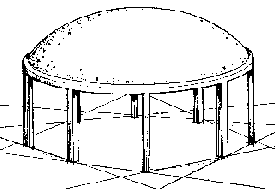
Domes of Revolution
Translation Shells


BARREL SHELLS

First find the longitudinal and shear (diagonal tension) reinforcing required for a typical interior element of the structure.

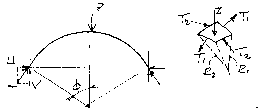
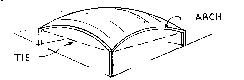
1. A barrel shells acts as a beam in the long direction and as an arch in the curved area. The arch is supported by internal shears. Approximate values for the bending moments in the arch are summarized in the following sketch.
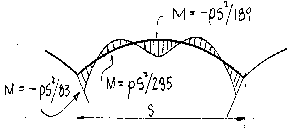
Bending Moments

2. The area of reinforcing is obtained by estimating the effective depth of the beam element, from the center of reinforcing to the center of compression. The force in the reinforcing is equal to the bending moment divided by the effective depth. It may require several approximations to get a fair value. The area of reinforcing is, of course, the force divided by the allowable stress.
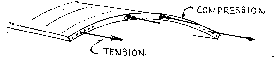
Force
 

3. The tension in the diagonal direction is determined first by equating the longitudinal force to the shear forces.
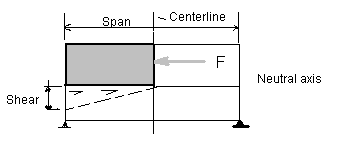
Shear = F

4. The sum of the shearing forces equals the longitudinal forces. Let S equal the unit shear at the end of the beam. Then: S times the width of the shell times the length divided by 4 equals the longitudinal force.

If there are no other forces on an element at the neutral axis of the beam, then the diagonal tension equals the shear. From this information, a pattern of diagonal tension bars can be constructed.

5. The horizontal reaction of the arch elements of the shell must be contained by an rigid frame and a horizontal tie. Assume that this is simply a wide arch equal to half of the span. An approximation for the horizontal force would be equal to the load per foot on this arch times the arch span, squared divided by 8 and the rise. The thrust in the arch can be determined from this and the vertical reaction.

6. The edge spans of the shell should be supported by intermediate columns. The stiffness of a barrel shell at the outside edges is simply not stiff or strong enough to carry the required loads. The shell reinforcing at the edge members acts more like a typical arch and should be reinforced with two layers of bars.

Return to start of program

Return to types of shells

FOLDED PLATES

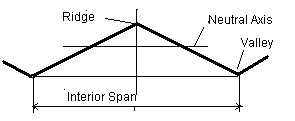
The design of folded plate roof structures follows the design of barrel shells, but is much simpler because the elements are all essentially beams.

1. Support the folded plate at its longitudinal edges by frequent columns as was suggested for barrel shells.

2. Analyse and design the slab element as a continuous beam on fixed supports, including the first spans, normally a simple support. If it is haunched, then as a continuous haunched beam.

Cross section

3. Design a typical longitudinal interior element as a beam by the usual methods.

4. Support the ends of the folded plates by rigid frames. In this case the frames are loaded by the shear forces from the slab element and are in the plane of the frame members.

Return to start of program
Return to types of shells


UMBRELLA SHELLS

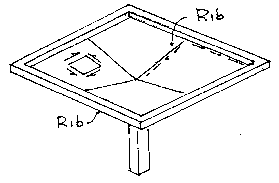
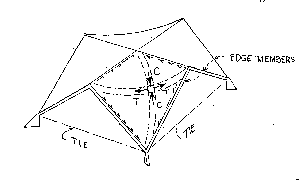
Following is a sketch of a typical inverted umbrella hypar. The principal elements are:

Umbrella shell

مسلح کردن خاک SOIL REINFORCEMENT PRODUCTS

محصولات پیشرفته مسلح کننده خاک(ADVANCED SOIL REINFORCEMENT PRODUCTS )

سیستم استراتا یکی از تولید کنندگان و پخش کنندگان بخش وسیعی از محصولات مسلح کننده خاک است . این محصولات جهت مسلح کردن خاکهای انباشته شده در شیبها و دیوارهای حایل و شیبهای تند و بقیه خاکهای نرم استفاده می شود .

در زیر تصاویری مربوط به این سیستم را مشاهده می کنید جهت کسب اطلاعات بیشتر به این سایت  مراجعه کنید. 

*********************************************************************

مسلح کردن دیوارهای حایل :

Project File : Post Spring Hill Apartments


Location: Atlanta, GA

Application: Apartment Community

Project Scope: 50,000 Square Feet of StrataGRID-reinforced Segmental Retaining Walls

Structure Height: Maximum wall height was 20 feet.

Contractor: Retaining Walls Company

Date Constructed: 1999

*********************************************************************

Project File : Country Manor Project


Location: Charlotte, NC

Application: Retaining wall in a residential subdivision

Project Scope: 6,000 square ft Country Manor retaining wall system reinforced with geogrids.

Height: Maximum structure height - 20 feet.

Contractor: Draw Enterprise

Date Constructed: 2002

 
*********************************************************************

مسلح کردن دیوارهای حایل

Project File : Morrison Plantation


Location: Mooresville, NC

Application: Retaining walls and steepened slopes in a shopping center development

Project Scope: 50,000 square feet of modular block retaining walls and reinforced steep slopes

Height: Maximum structure height - 48 feet.

Contractor: Eckhart Construction Company

Date Constructed: 2000

*********************************************************************

مسلح کردن شیبهای تند

Project File : South Carolina Department of Transportation, Clemson Road Project


Location: Columbia, SC

Application: Reinforced Bridge Approach

Project Scope: StrataGRID-reinforced steep slope

Structure Height: 35 feet tall, 1H:1V slope face.

Date Constructed: 1998

^^^^^^^^^^^^^^^^^^^^^^^^^^^^^^^^^^^^^^^^^^^^^^^^^^^^^^^^^^^^^

SOURCE : http://geogrid.com/index.html


آسمان خراش کریسلر (Crysler skyscarper)

برج کريسلر :


به جرات مي توان گفت که برج کريسلر اولين آسمان خراش قرن 21 در کشور ايالات متحده مي باشد . اين برج در سال 1930 در شهر نيويورک با هزينه اي بالغ بر 20 ميلوين دلار در 77 طبقه با سازه اي فولادي و نماي آجري توسط ويليام وان آلن در ارتفاع 319 متر ساخته شد. صاحب برج والتر کريسلر سرمايه دار اتوموبيل بود . اگرچه آقاي کريسلر روياي رکورد دار بودن برجش را به عنوان بلند ترين آسمان خراش دنيا فقط 4 ماه به دوش کشيد .


 برج امپاير استايت به زودي رکورد کريسلر را شکست . نکته قابل توجه برج نماي جالب آن است که بعد ها نمونه هايي از روي آن در ساير کشور ها ساخته شد. اگرچه شايد هيچ يک از کپي برداران ندانستند که آقاي کريسلر مي خواسته اتوموبيل هايش را در نماي ساختمان مجسم کند. 


 جالب است بدانيد کريسلر هيچ گاه دستمزد وان آلن به عنوان پيمانکار را پرداخت نکرد ، زيرا معتقد بود وي در برخي سوظن هاي مالي با بقيه پيمانکاران همکاري داشته است .حدود 750 مايل کابل الکتريکي در ساخت برج به کار رفته سازه آهني آن نيز حدود 21000 تن وزن دارد برج کلا 10000 لامپ و 3862 پنجره دارد.  امروزه اين برج به عنوان مرکز هنري دکو در نيويورک شناخته مي شود .


منبع : کتاب آسمانخرشها نوشته محمد جمالی مقدم

روند تولید سمان را بصورت فلش ببینید  


در این لینک روند تولید سیمان را بصورت فلش می توانید ببینید.


لغات تخصصی عمران قسمت نهم

Every thing about tunnels

With more than six million kilometers of highways and 240,000 kilometers of railways snaking across the United States, life above ground has become increasingly congested. Tunnels provide some of the last available space for cars and trains, water and sewage, even power and communication lines. Today, it's safe to bore through mountains and burrow beneath oceans -- but it was not always this way. In fact, it took engineers thousands of years to perfect the art of digging tunnels.

Image of a Roman Aqueduct
Ancient Roman aqueduct

_

Before cars and trains, tunnels carried only water.
Roman engineers created the most extensive network of tunnels in the ancient world. They built sloping structures, called aqueducts, to carry water from mountain springs to cities and villages. They carved underground chambers and built elegant arch structures not only to carry fresh water into the city, but to carry wastewater out.


Image of Worsley Underground Canal Tunnel
Worsley Underground
Canal Tunnel

_

By the 17th century, tunnels were being constructed for canals.
Without roads or railways to transport raw materials from the country to the city, watery highways became the best way to haul freight over great distances.


Image of the Holland Tunnel
Holland Tunnel

_

With trains and cars came a tremendous expansion in tunnel construction.During the 19th and 20th centuries, the development of railroad and motor vehicle transportation led to bigger, better, and longer tunnels.


Image of a tunnel boring machine
Tunnel boring machine

_

Today, not even mountains and oceans stand in the way.
With the latest tunnel construction technology, engineers can bore through mountains, under rivers, and beneath bustling cities. Before carving a tunnel, engineers investigate ground conditions by analyzing soil and rock samples and drilling test holes.


There are three steps to a tunnel's success.
Today, engineers know that there are three basic steps to building a stable tunnel. The first step is excavation: engineers dig through the earth with a reliable tool or technique. The second step is support: engineers must support any unstable ground around them while they dig. The final step is lining: engineers add the final touches, like the roadway and lights, when the tunnel is structurally sound.

Based on the setting, tunnels can be divided into three major types:


Image of Brunel's shield
Section of Brunel's
tunnel shield

_

Soft-ground tunnels...
are typically shallow and are often used as subways, water-supply systems, and sewers. Because the ground is soft, a support structure, called a tunnel shield, must be used at the head of the tunnel to prevent it from collapsing.

Check out the forces that act on soft-ground tunnels!


Image of the Hoosac Tunnel
Hoosac Tunnel interior

_

Rock tunnels...
require little or no extra support during construction and are often used as railways or roadways through mountains. Years ago, engineers were forced to blast through mountains with dynamite. Today they rely on enormous rock-chewing contraptions called tunnel boring machines.

Ted Williams Tunnel

Tunnel segment,
Boston Harbor


_
Underwater tunnels...
are particularly tricky to construct, as water must be held back while the tunnel is being built. Early engineers used pressurized excavation chambers to prevent water from gushing into tunnels. Today, prefabricated tunnel segments can be floated into position, sunk, and attached to other sections.


شاید این جمعه بیاید ... شــــــــــــاید ...

شاید این جمعه بیاید ... شــــــــــــاید ...


خبر آمد خبری در راه است
سرخوش آن دل که از آن آگاه است
شاید این جمعه بیاید...شاید
پرده از چهره گشاید...شاید
دست افشان...پای کوبان می روم
بر در سلطان خوبان می روم
می روم بار دگر مستم کند
بی سر و بی پا و بی دستم کند
می روم کز خویشتن بیرون شوم
در پی لیلا رخی مجنون شوم
هر که نشناسد امام خویش را
بر که بسپارد زمان خویش را
با همه لحظه خوش آواییم
در به در کوچه ی تنهاییم
ای دو سه تا کوچه ز ما دورتر
نغمه ی تو از همه پر شور تر
کاش که این فاصله را کم کنی
محنت این قافله را کم کنی
کاش که همسایه ی ما می شدی
مایه ی آسایه ی ما می شدی
هر که به دیدار تو نایل شود
یک شبه حلال مسائل شود
دوش مرا حال خوشی دست داد
سینه ی ما را عطشی دست داد
نام تو بردم لبم آتش گرفت
شعله به دامان سیاوش گرفت
نام تو آرامه ی جان من است
نامه ی تو خط اوان من است
ای نگهت خاست گه آفتاب
در من ظلمت زده یک شب بتاب
پرده برانداز ز چشم ترم
تا بتوانم به رخت بنگرم
ای نفست یارومدد کار ما
کی و کجا وعده ی دیدار ما
دل مستمندم ای جان به لبت نیاز دارد
به هوای دیدن تو هوس حجاز دارد
به مکه آمدم ای عشق تا تو را بینم
تویی که نقطه ی عطفی به اوج آیینم
کدام گوشه ی مشعر
کدام گوشه ی منا
به شوق وصل تو در انتظار بنشینم
ای زلیخا دست از دامان یوسف بازکش
تاصبا پیراهنش را سوی کنعان آورد
ببوسم خاک پاک جمکران را
تجلی خانه ی پیغمبران را
خبر آمد خبری در راه است
سر خوش آن دل که ار آن آگاه است
شاید این جمعه بیاید...شاید
پرده از چهره گشاید...
شاید

یا ابا صالح المهدی ادرکنی


خبر آمد خبری در راه است
سر خوش آن دل که ار آن آگاه است
شاید این جمعه بیاید...شاید
پرده از چهره گشاید...
شاید


ساختمان 311 south wacker drive

ساختمان 311 south wacker drive

اين ساختمان در شيکاگو در سال 1998-1990 ساخته شده است . يک ساختمان بتن مسلح فوق بلند مي باشد . ارتفاع آن 295 متر (969 فوت)  در 65 طبقه و با مقاومت فشاري بتن     psi    12000 (82.7 مگاپاسکال) مي باشد. سيستم سازه اي آن لوله اصلاح شده با قاب جانبي بتني مسلح ستون هاي فلزي داخلي و دال بتني و فلزي کامپوزيت است ، ساختمان طوري مهندسي شده که ، سختي نسبي المان هاي داخلي و خارجي در تمام ارتفاع ساختمان همانند يکديگر است . در اين ساختمان از بتن با مقاومت فشاري 68.9 مگا پاسکال و 82.7 مگا پاسکال استفاده شده است . دال هاي سقف پس تنيده ميزان فولاد مصرفي را کاهش داده است .


 در هنگام اتمام (1990) بلندترين ساختمان بتني دنيا بود ولي پس از 2 سال رکورد آن توسط ساختمان بازار مرکزي هنگ کنگ (Central plaza ) شکسته شد. نوک ساختمان يک استوانه بزرگ است که بوسيله 4 استوانه کوچکتر احاطه شده است و پنج استوانه روي پشت بام بوسيله 1852 لامپ فلوروسنت در شب روشن مي شوند و روشنايي مانند ماه کامل ايجاد مي کنند. البته يکي از رکوردهاي اين برج که تا به امروز باقي مانده اينست که تنها ساختمان بلند دنياست که تنها بواسطه آدرس خيابانش شناخته مي شود. اين ساختمان کاربري اداري دارد .


منبع : کتاب آسمان خراشها نوشته محمد جمالی مقدم


باغ ارم شیراز


در شمال غربي شيراز و در انتهاي خيابان ارم و در تقاطع بلوار شرقي - غربي باغ ارم و بلوار شمالي - جنوبي جام جم و آسياب سه تايي، باغ ارم قرار گرفته است. اين باغ به مناسبت عمارت و باغ بزرگي كه در گذشته توسط شدادبن عاد پادشاه عربستان به رقابت با بهشت ساخته شده و ارم ناميده شده بود، به باغ ارم مشهور گرديده است.

تاريخ ساخت اين باغ را به دروه سلجوقيان نسبت داده اند چرا كه در آن زمان، باغ تخت و چند باغ ديگر توسط اتابك قراجه حكمران فارس - كه از سوي سنجر شاه سلجوقي به حكومت فارس منصوب شده بود، احداث شد و احتمال ايجاد اين باغ به درخواست وي و در آن زمان، زياد است. همچنين احتمال مي رود كه اين باغ در زمان كريم خان زند مرمت شده باشد.

در اواخر سلسله زنديه، بيش ا ز75 سال اين باغ در تصاحب سران ايل قشقايي بود، بناي اوليه عمارت باغ ارم توسط جاني خان قشقايي اولين ايلخان قشقايي و پسرش محمدقلي خان و در زمان فتحعليشاه قاجار احداث شده است. معماري بنا نيز توسط شخصي به نام حاج محمد حسن كه از معماران معروف بود، صورت گرفته است.

در زمان ناصرالدين شاه قاجار، ميرزا حسن علي خان نصيرالملك، آن باغ را از خاندان قشقايي خريد و ساختمان كنوني را به جاي عمارت قبلي ساخت، اما تزئينات ناتمام باغ پس از فوت حسنعلي خان در سال 1311 توسط ابوالقاسم خان نصيرالملك پايان يافت.

باغ ارم پس از فوت ابوالقاسم خان نصيرالملك به پسرش عبدالله قوامي رسيد و بعد از مدتي دوباره يكي از خوانين ايل قشقايي به نام محمد ناصر خان آن را خريد.

عمارت اصلي باغ ارم طبق معماري دوره صفويه تا قاجاريه بنا شده است. اين ساختمان داراي سه طبقه است كه طبقه زيرين داراي حوض خانه اي براي استراحت در روزهاي گرم تابستان است كه در آن آب نماي زيبايي است و طاق آن با كاشي هاي هفت رنگ مزين شده است. جوي آبي نيز از وسط آن مي گذرد و سپس به آب نماي بزرگ جلوي عمارت مي ريزد.

طبقه دوم داراي ايواني دوستوني با سقف مسطح است كه در پشت آن تالاري قرار دارد و دو طرف آن دو راهرو، 4 اتاق در دو طرف راهرو و دو ايوان كوچك و دو طبقه ساخته شده است و بر فراز اين دو راهرو، دو گوشواره به عنوان طبقه سوم وجود دارد.

قسمت جلويي ستون هاي اين دو طبقه با كاشي هاي هفت رنگ مزين به مجالسي از سواران، زنان و گل ها شده است.

طبقه سوم، داراي يك تالار بزرگ مانند تالار طبقه دوم است كه پنجره هاي آن به ايوان اصلي باز مي شود. در دو طرف آن ينز دو راهرو وجود دارد. دو ايوان كوچك نيز در هر طرف ايوان بزرگ همانند طبقه سوم قرار دارد.

در پيشاني عمارت، هلالي هايي وجود دارد كه به سنتوري معروف است و داراي سه مجلس بزرگ و دو مجلس كوچك كاشيكاري با كاشي هاي لعابدار رنگي است.

در هلالي ميدان كه بزرگترين هلالي است، نقش ناصرالدين شاه، سوار بر اسب سفيدي ديده مي شود كه نيم تاجي نيز در جلو كلاه خويش دارد. در اطراف آن، سه نقش ديگر كه برگرفته از داستان هاي فردوسي و نظامي است، ديده مي شود. در دو طرف اين مجلس، دو مجلس كوچك وجود دارد كه در وسط يكي از آنها نقش داريوش هخامنشي برگرفته از نقوش تخت جمشيد وجود دارد. دو مجلس ديگر كه در اطراف اين مجلس است، تصوير شكار آهويي توسط پلنگي را بر روي كاشي هايي با طرح اسليمي نشان مي دهد. در ضلع شمالي عمارت و چسبيده به آن هشت باب اتاق قرار دارد كه در حال حاضر مورد استفاده جهت امور اداري باغ گياهشناسي ارم است. در پشت ساختمان اصلي، ساختمان و محوطه اندرون قرار دارد. در جلو اين عمارت، حوض وسيعي قرار گرفته كه با كاشي آبي رنگ كاشي كاري شده است.

ازاره هاي جلوي عمارت اصلي از سنگ گندمك يكپارچه است كه بيش از دو متر بلندي دارد. تعداد آنها 8 تاست كه بر روي 6 تاي آنها كتيبه هايي از اشعار حافظ، سعدي و شوريده به خط نستعليق ميرزا علينقي شريف شيرازي نوشته شده است. در تخته سنگ آهكي نيز نقشي وجود دارد و در وسط آنها پنجره آهني قرار گرفته. اين نقوش كه تقليدي از نقوش تخت جمشيد است، تصوير مردي نيزه به دست با لباس و كلاه يك مرد عشايري را نشان مي دهد.

در سال هاي 50-1345 ه. ش. اين باغ در زير نظر مسؤولين دانشگاه شيراز تعمير شد. هم چنين در سال 1358 به وسيله سازمان ميراث فرهنگي مرمت گرديد، هم اكنون اين باغ به عنوان باغ گياهشناسي مورد استفاده قرار گرفته است. اين باغ در تاريخ 1353.8.12 به ثبت تاريخي رسيده است .

منبع : http://www.shirazcity.org